An introduction to crêpes
Ahh, crêpes, the beloved sweet (or salty!) pancakes, but not quite, of the French republic. Delicate, versatile, delicious, crêpes are served at all times of the day, and any time of the day.
Luckily, crêpes are easy to make and require only a handful of ingredients; they are easily mastered in no time. This recipe will guide you through the step by step process so you, too, can make soft, thin, and delicious crêpes at home.
Tools you’ll need
- Mixing bowl
- Whisk
- Measuring scale
- Non-stick skillet or crêpe pan
- Ladle or really large spoon
- Silicone spatula
For more insights on essential tools for French baking, check out this article.
Ingredients
Makes approximately 10-12 crêpes
- 250g all-purpose flour
- 450ml whole milk (room temperature ideally)
- 3 large eggs, or 4 medium
- 2 tbsp dark rum (optional, but recommended)
- 1 tbsp vanilla extract
- 2 tpsb sugar
- a pinch of salt
- 50g melted butter + more for the pan
Step-by-step instructions
Step 1 – Mix the dry ingredients
In a large bowl, whisk together the flour, sugar, and salt until combined. Here, you can substitute 50g of flour for 50g of cornstarch for extra softness.
Step 2 – Add the wet ingredients
Add the eggs and melted butter, then progressively add the milk while whisking to avoid clumps.
Add the rum and the vanilla extract and whisk until combined.
Step 3 – Rest the batter
Let the batter rest for at least 30 minutes to 1 hour before cooking. This allows the flour to hydrate fully and creates more tender crêpes.
Step 4 – Heat the pan
Lightly butter or oil a non-stick skillet and heat it over medium heat. The pan should be hot, but not smoking.
Step 5 – Cook the crêpes
Pour a small ladle of batter into the center of the pan and immediately swirl the pan to spread the batter into a cirlce across its surface.
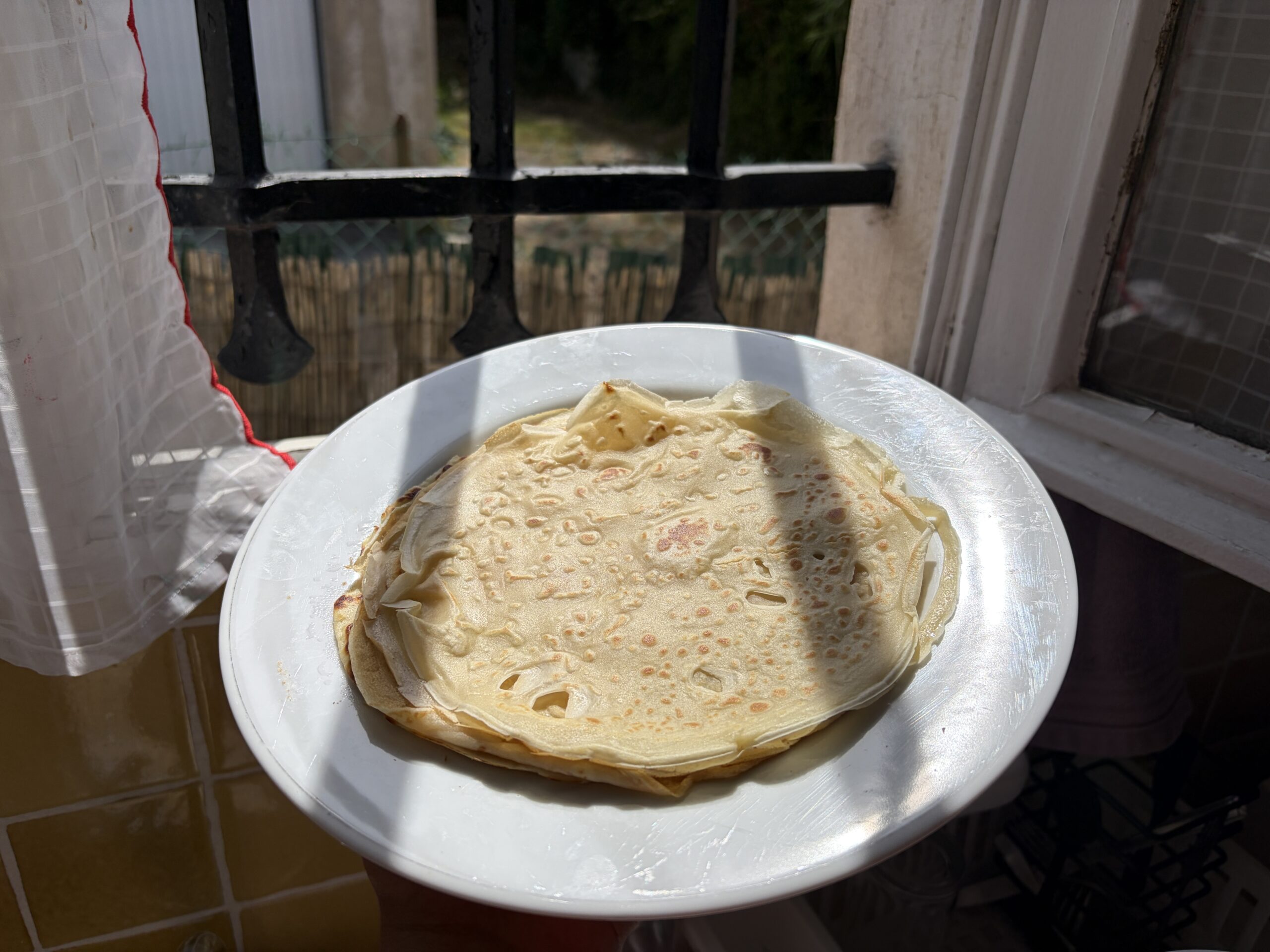
Cook on one side until the edges lift easily, then flip to the other. Both sides should be lightly golden.
Note – The first crêpe will never be as succesful as the ones that follow.
Step 6 – Repeat
Continue with the remaining butter, lightly buttering the pan as needed.
Stack the cooked crêpes on a plate and cover them with a clean kitchen towel or place them in a closed oven (turned off) to keep them soft.
Step 7 – Serve
Serve your crêpes with whatever toppings tickle your fancy! Their versatility allows for your creativity to run wild.
Sweet options
- Nutella
- Fresh strawberries and whipped cream
- Banana and peanut butter
- Powdered sugar
- Sugar and lemon
- Homemade pastry cream
Savory options
- Ham and cheese
- Spinach and cheese
- Smoked salmon and cream cheese
- Eggs
Tips for perfect crêpes
- Letting the batter rest is essential for softer results!
- Keep the crêpes thin.
- Don’t worry if the first crêpe isn’t perfect! It’s reknowned in France as the “test crêpe”.
Mistakes to avoid
- Batter too thick
A thick batter produces heavy crêpes as opposed to the soft delicate ones we’re searching for. Add more milk little by little if needed.
- Skipping the rest time
Resting improves crêpe texture and flexibility.
- Pan too hot
Careful! Crêpes can burn quickly if the pan is overheated.
- Too much batter in the pan
Using too much batter in the pan will create thick and sturdy pancakes rather than authentic and flimsy French crêpes
- Choice of pan
A non-stick pan, or enough grease is essential for a successful crêpe. The sort of pan that would allow you to throw your crêpe in the air to flip it.
For more information on typical mistakes in French baking check out this article.
As always, enjoy!
French crêpes are an easy and rewarding recipe for beginner bakers. With the right pantry essentials and an hour of time, you can whip up some soft gooey deliciousness at any time in the day for yourself, friends, and family.