
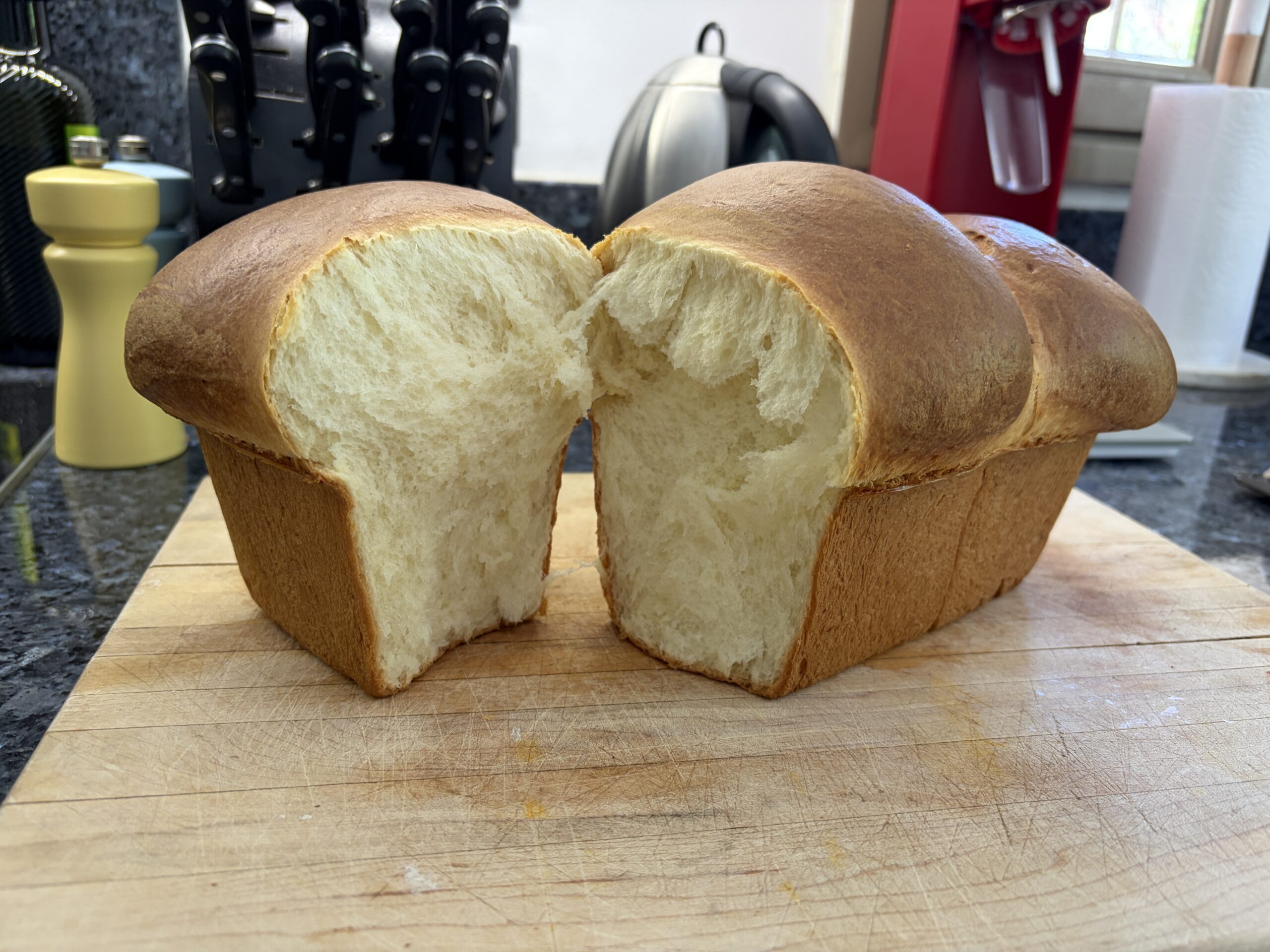
Brioche is an incredibly popular French bread and breakfast staple, known for its soft texture and its rich, buttery goodness. It may seem intimidating to make, but with the right tools and patience, it is much easier than it looks.
Here is a beginner-friendly method to make delicious French brioche.
What is Brioche ?
Brioche is a traditional French bread made with butter, eggs, and flour. Unlike regular bread, it has a soft and slightly sweet texture, making it perfect for breakfast or desserts.
It pairs beautiful with jam, chocolate spread, peanut butter, bananas… Really just about everything; it is too delicious to let you down and owns its spot as one of the most loved French baked goods.
Why this recipe is perfect for beginners.
This recipe uses simple ingredients with step by step instructions to ensure lovely results. By following a clear process and taking your time (because time is a key player in a good brioche), you can achieve a soft and fluffy texture on your first attempts.
Ingredients you’ll need.
Only a few basic ingredients are needed:
- Flour
- Eggs
- Butter
- Sugar
- Milk
- Yeast
- Salt
The quality of your ingredients will naturally improve the flavor and texture of your brioche. For best results, make sure your butter is soft and your eggs are at room temperature before starting.
Tools You’ll Need
The right tools drastically simplifies the brioche-making process.
A digital kitchen scale is important for measuring ingredients and achieve consistent results. If you’re not familiar with essential tools, you can check out my guide on French baking tools for beginners.
A stand mixer, or mixing bowls to combine and knead the dough more easily also come in handy.
Ingredients
- 500g all purpose or bread flour
- 8g active dry yeast
- 100g sugar
- 100g butter (softened)
- 2 eggs (ideally room temperature)
- 200ml milk (ideally room temperature)
- 3g salt
- 2g vanilla powder (optional)
Step-by-step instructions
Step 1 – Mix the ingredients – In a large mixing bowl, or the bowl of a stand mixer, combine the eggs and yeast, followed by the flour, salt, and sugar. Mix lightly, then add the room temperature milk and mix everything together until a soft and stretchy dough forms. It may feel slightly sticky at this stage which is normal.
Step 2 – Knead the dough – Knead the dough for about 8-10 minutes by hand, or 6 minutes with the dough hook on the stand mixer at low to medium speed. The dough should start to hold itself together or show signs of what the French call a “gluten network”.
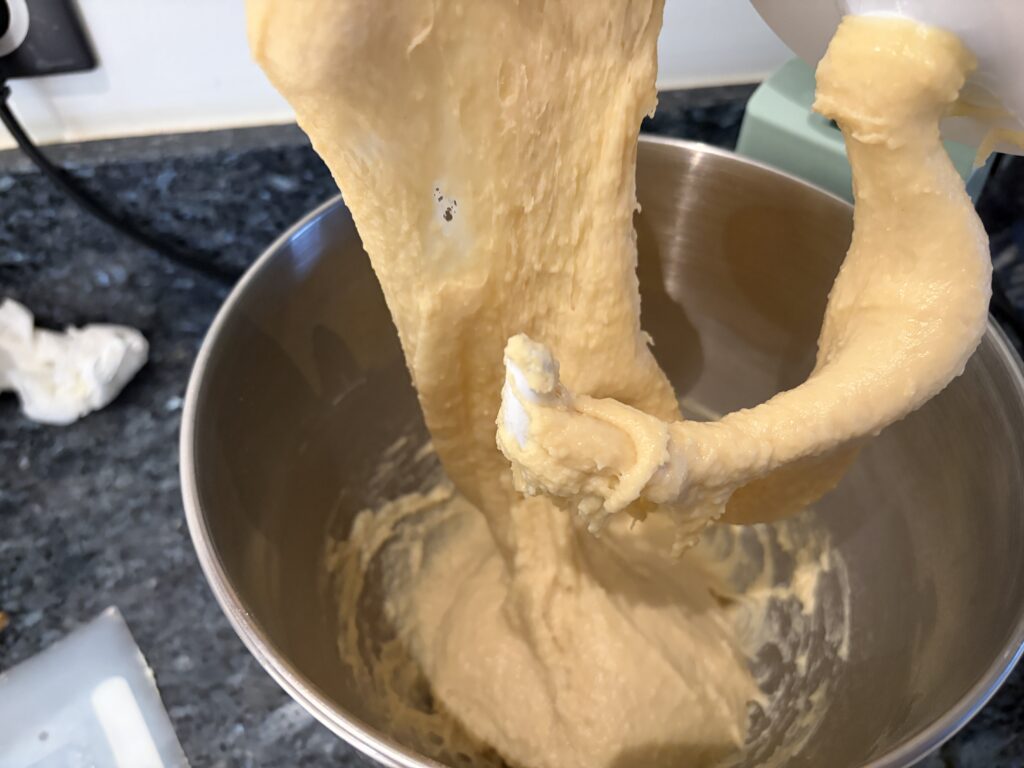
Add half of the butter and knead until it is mixed into the dough, then add the second half. Gradually adding the butter is essential to give brioche its rich and soft texture.
Step 3 – Kneading
- By hand, continue kneading until the dough no longer sticks to your hands, this can take some time. Be patient, put on a show, music, or podcast, and keep going.
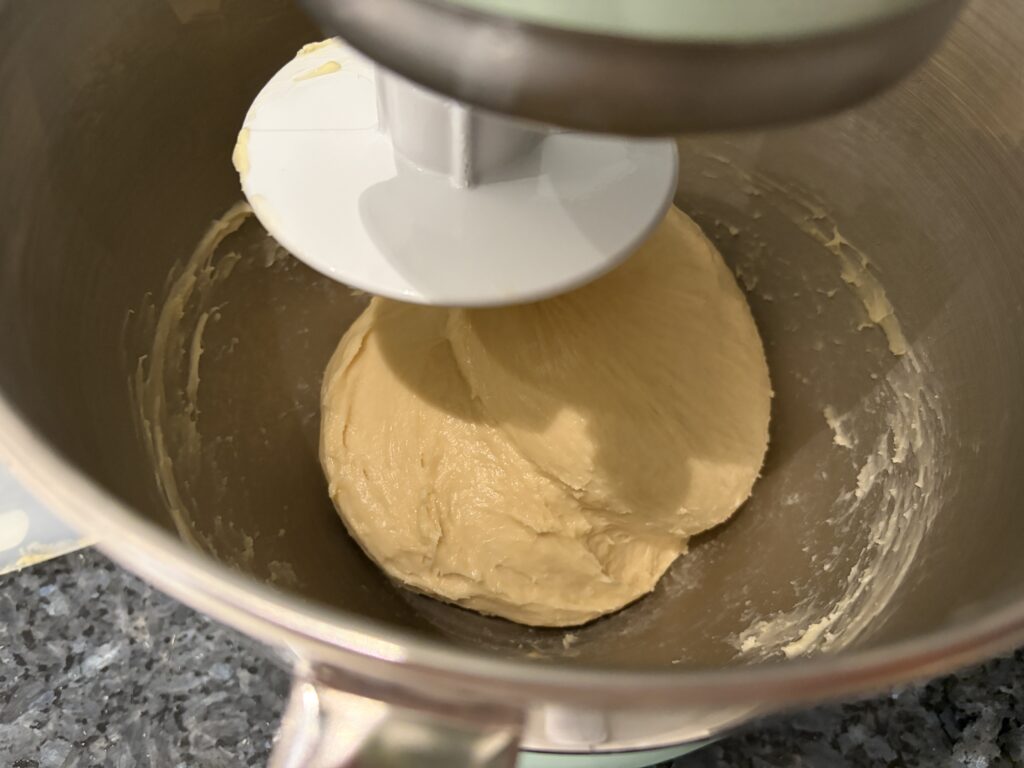
- On the stand mixer, knead the dough on medium speed until it detaches from the bowl, about 10-20 minutes.
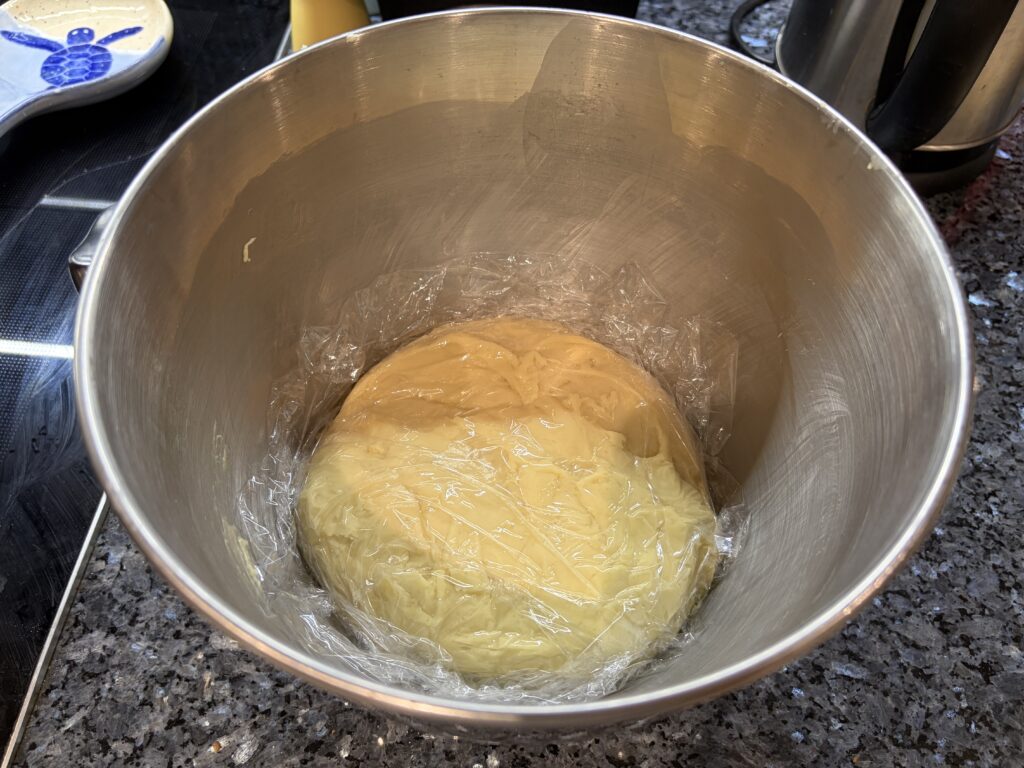
Step 4 – First rise – Place the dough in a bowl and cover it with a clean towel, let is rise in a warm place for about 1 to 2 hours, until it has doubled in size, or overnight in the fridge.
The resting time allows the dough to develop flavor and structure.
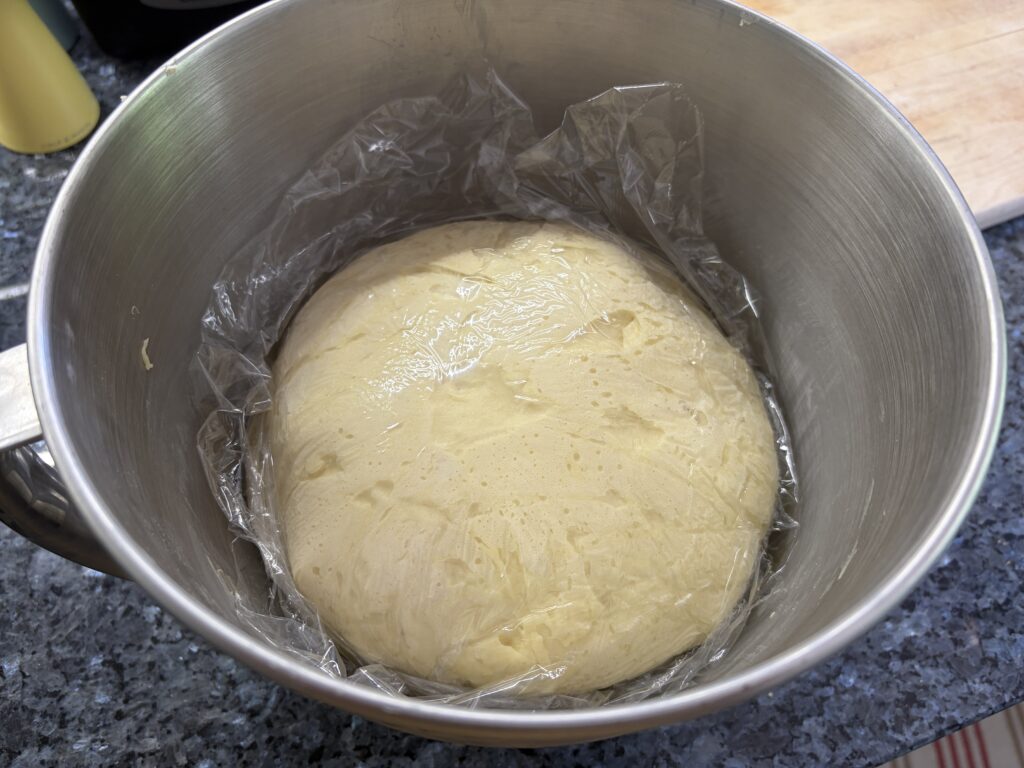
Step 5 – Shape the dough – Once the dough has risen, gently press it down to remove excess air.
The dough should weigh about 1kg. Separate it into 3 balls of around 330g and place them next to another in a loaf pan.
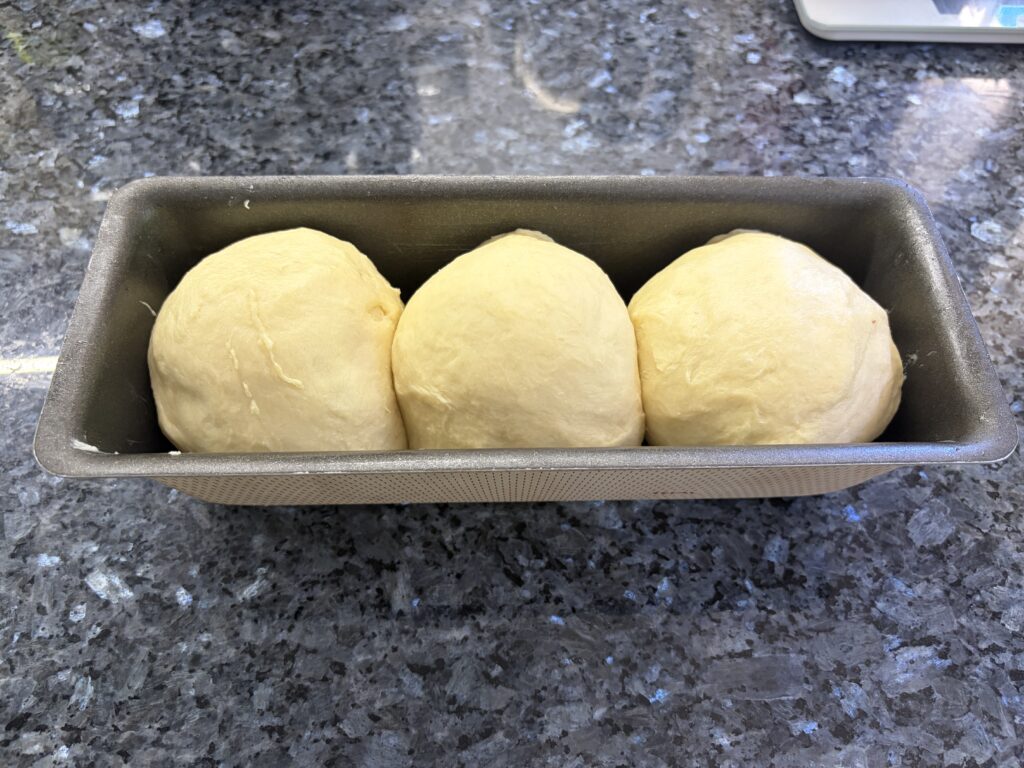
Step 6 – Second rise – Let the shaped dough rest at room temperature for about 1 and a half to 2 hours, or until it has doubled in size. This second rise helps create a soft and more airy brioche.
Pro tip ! Yeast reacts to heat, if your space is not warm enough, place a recipient filled with hot water in your oven with the loaf pan for the dough to rise.
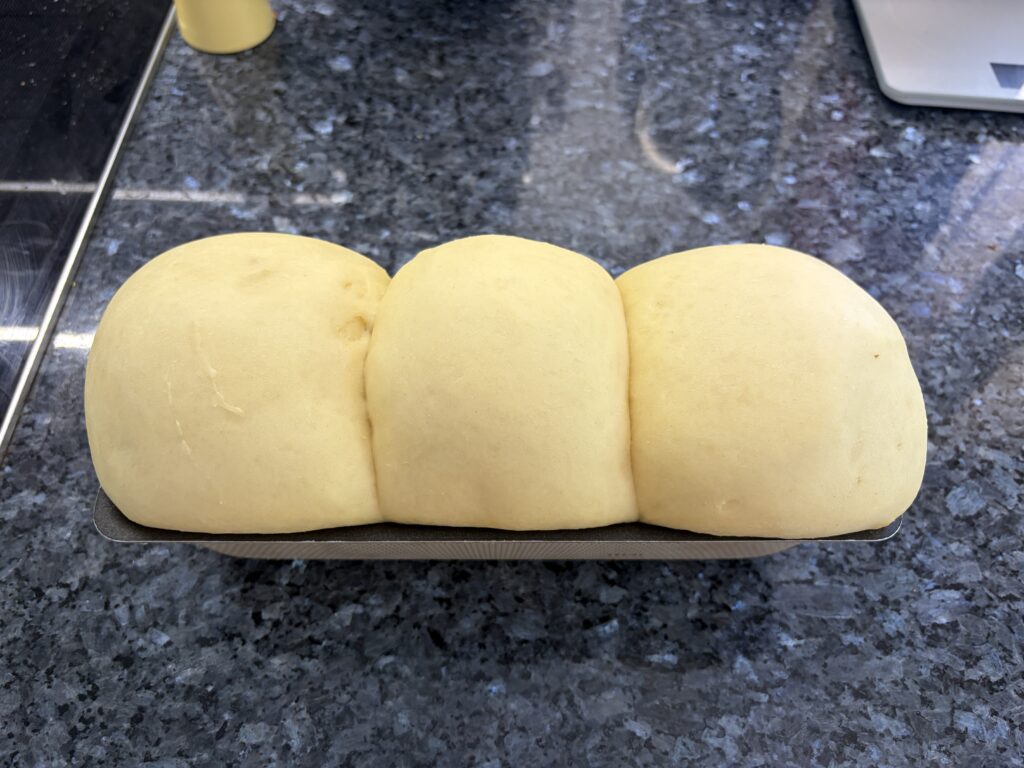
Step 7 – Egg wash and bake – Preheat your oven to 350’F. Beat one egg in a bowl with a fork, and using a paint brush or paper towel, lightly cover the brioche with the beaten egg. This will ensure a colorful and shiny finish. At this point, you can also top your dough with chocolate chips, large grain pearl sugar, sesame seeds, or other toppings you’d like to add.
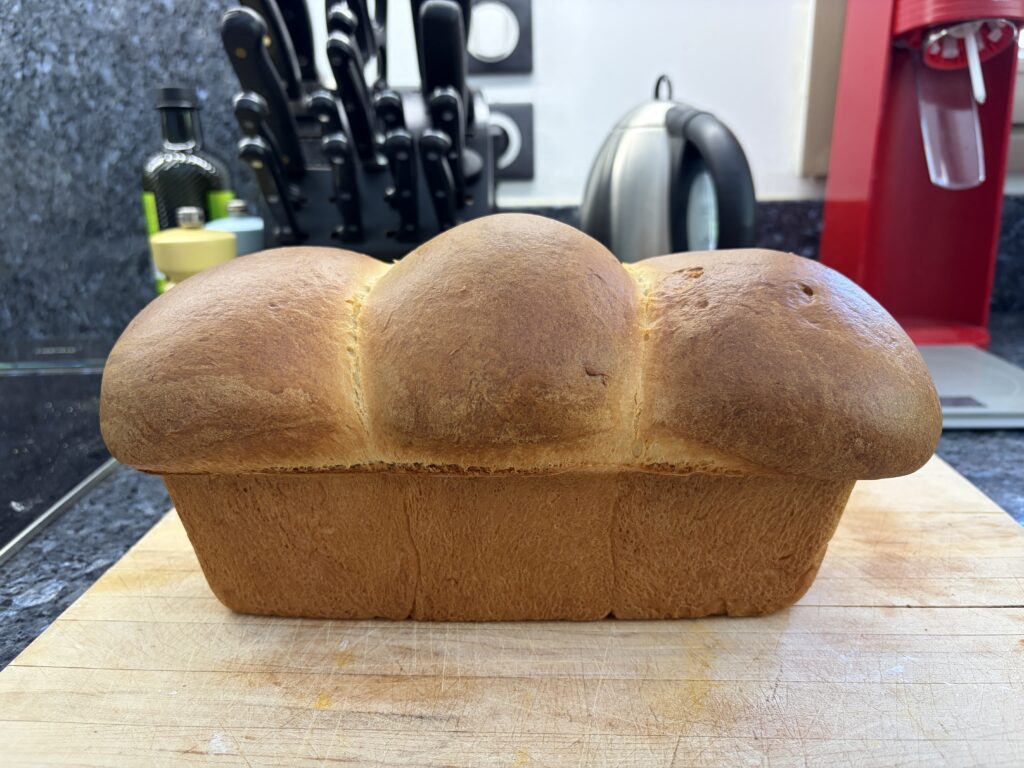
Lower the oven heat to 340’F and bake the brioche for 30 to 35 minutes.
Let it cool slightly before serving to allow the texture to fully set.
Tips for Perfect Brioche
For the best results, always use room temperature ingredients. This helps the dough mix more evenly and rise properly.
Be patient with the rising times, rushing this step can affect the texture of your brioche.
If your dough feels too sticky, avoid adding flour. Instead, continue kneading until it becomes smoother.
Finally, keep an eye on your oven baking to avoid overcooking.
Common Mistakes to Avoid
- Not measuring the ingredients accurately can affect the final texture. Using a digital scale can help prevent this.
- Not allowing enough time for the dough to rise. Proper rising is essential for a light and fluffy brioche, especially the second rising. Make sure your dough has doubled in size after you’ve shaped it or put it in a mold.
- Overbaking can also make the brioche dry, so it’s important to remove it from the oven once it turns golden brown.
- Finally, avoid adding too much flour, this can make the dough heavy instead of soft.
Final Thoughts
Making brioche at home may seem challenging at first, but with a simple method and a bit of patience, it becomes much easier.
This beginner-friendly recipe is a great way to start exploring French baking while building your confidence in the kitchen.
With practice, you’ll be able to improve your technique and enjoy soft, homemade brioche whenever you like.
Pingback: How to Separate Eggs for Baking (Step-by-Step Guide)